Salamander Lizard Illustration: A Vibrant Vector Asset for Creative Projects
Finding the right visual asset can often feel like searching for a specific key to unlock a project's potential. You need something that is not only visually appealing but also versatile, professional, and ready for immediate application. The Salamander Lizard Animal Illustration package is precisely this kind of key—a vibrant, character-driven design asset built for a wide range of creative and commercial uses. It’s more than just a picture of an animal; it’s a tool for storytelling, branding, and engagement, packaged in a format that respects a professional workflow.
Anatomy of a Versatile Design Asset
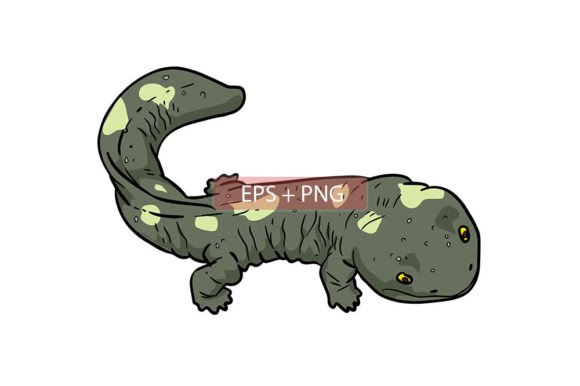
At its core, the Salamander Lizard Animal Illustration is a pre-rendered, high-resolution PNG file and a fully scalable vector EPS file. The 4-megapixel PNG offers immediate use with a transparent background, perfect for quick composites or digital placement. The true power, however, lies in the vector EPS file. This format means the illustration is built from mathematical paths and shapes, not pixels. You can scale this salamander to the size of a billboard or a postage stamp without a single loss of quality, ensuring crisp, clean lines at any dimension. This is a fundamental requirement for any serious premium font or design asset intended for professional application.
The visual style strikes a balance between realism and approachable charm. The salamander isn’t a hyper-detailed scientific rendering, nor is it a simplistic cartoon. Its textured skin, articulated limbs, and expressive, watchful eyes are rendered with a clear, modern illustration style. This gives it personality—curious, alert, and a little adventurous—without becoming overly childish. The color palette is typically rich and natural, allowing it to fit into organic, nature-themed projects or to be easily recolored to match specific brand guidelines. This adaptability is crucial for a creative font or illustration asset, as it needs to integrate seamlessly into an existing brand identity rather than force a new one.
Strategic Applications: From Classroom to Commerce
The utility of this package spans a remarkable breadth of projects. For educators and creators in the children's market, the file's origin story is immediately relevant. It's explicitly designed for kindergarten worksheets, school projects, and junior activity books. The clean vector lines are ideal for coloring pages, and the friendly demeanor makes it a perfect mascot for a child’s blog or an art class tutorial. For graphic project needs, it excels in creating stickers—both die-cut vinyl stickers and digital sticker sheets for planners and messaging apps.
Beyond the educational sphere, the illustration's professional quality opens doors to commercial applications. Imagine this salamander as the central character in a pet store's logo, a nature conservation nonprofit's brochure, or an outdoor apparel brand's packaging design. It can bring life to editorial design in magazines or books focused on wildlife, science, or fantasy. In the digital realm, it's a standout element for social media graphics, website hero images, or app icons for a nature identification tool. Its character makes it memorable, directly impacting audience engagement and brand recall. Using a well-crafted illustration like this is a shortcut to adding personality and professionalism to a web design or marketing campaign.
Integrating the Asset into Your Design Workflow
Effective use of any design asset requires thoughtful integration. The first step is evaluating project fit. This salamander illustration communicates themes of nature, curiosity, resilience, and a touch of whimsy. It would be a poor fit for a corporate law firm or a luxury watch brand, but an excellent match for an eco-friendly product line, a children’s book publisher, a veterinary clinic, or a boutique brewery with a rustic aesthetic. Understanding this tonal alignment is key to maintaining brand perception and consistency.
Once fit is established, consider the visual hierarchy. Will the salamander be the main focal point, or a supporting element? Its detailed rendering allows it to command attention as a primary mark in a logo or on a product label. Alternatively, it can be used as a subtle, recurring motif in a pattern, a watermark, or a small icon to build a cohesive visual language. When pairing it with typography, the goal is complementarity, not competition. A clean, modern sans serif font often works beautifully for body copy, allowing the illustration's organic shapes to stand out. For a headline, a slightly more expressive but still legible display font or even a script font could be paired, provided it doesn't clash with the illustration's friendly character. Always test font pairings to ensure the overall composition feels balanced.
Finally, the technical delivery is a professional advantage. Having both a high-res PNG and a vector EPS file is the industry standard for a reason. The PNG is for final output in fixed-size digital contexts. The EPS is your master file, the one you use in Adobe Illustrator or other vector software to make color changes, isolate elements, or incorporate the salamander into a larger logo design system. This dual-format approach ensures you have maximum flexibility, whether you're working on a quick social media graphic or a large-scale print run for packaging design. By treating this illustration not as a static image but as a modular component of your larger creative toolkit, you unlock its full potential to elevate your work. It’s a practical, high-quality solution for anyone who needs to inject a dose of nature and character into their visual communications.